From hillside to hallway
The Process
A painting can take six months from first walk to final varnish. Here is what happens in between.
01
Looking
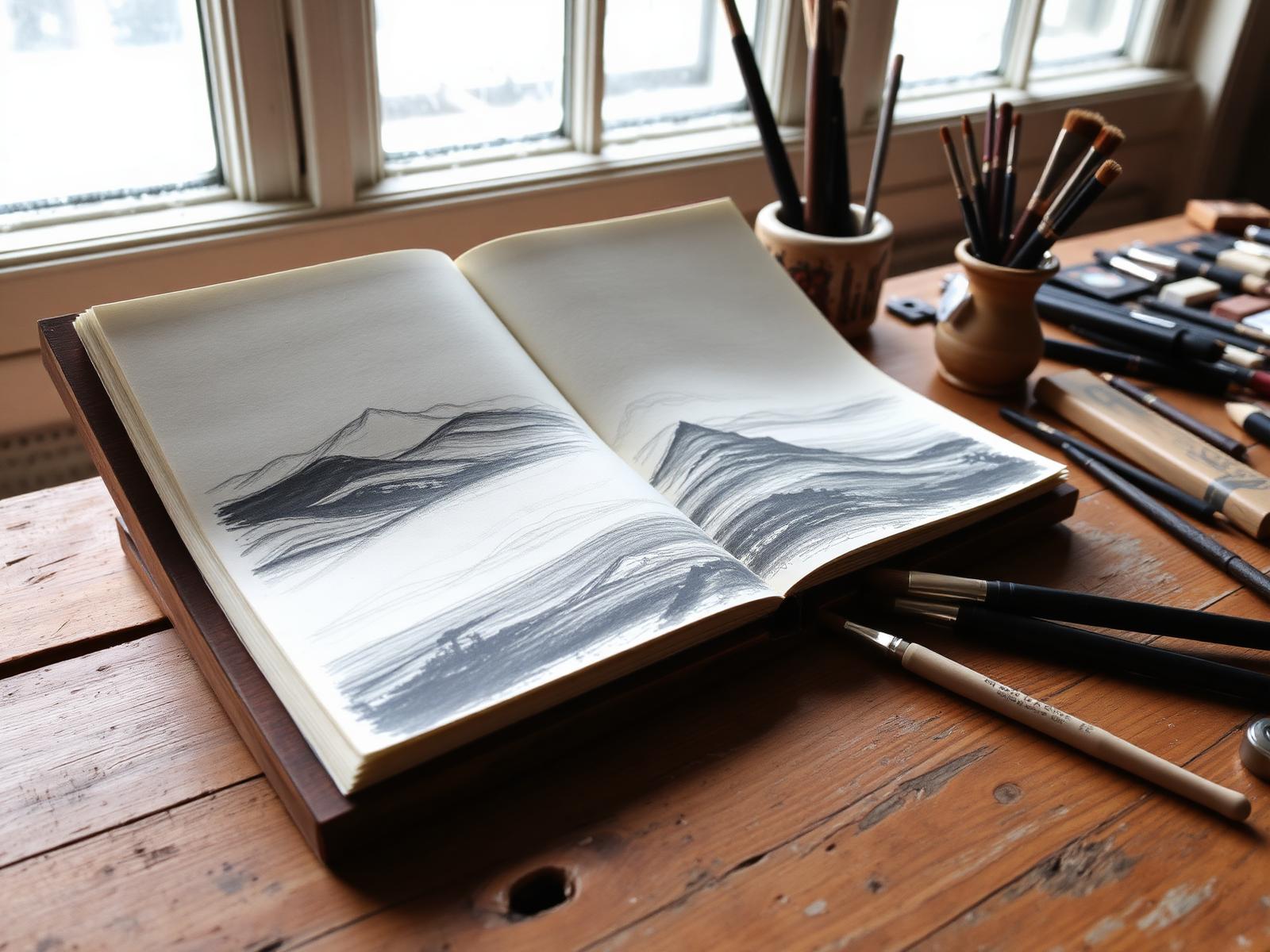
Every painting begins with weeks of walking — sometimes the same hillside at different hours, in different weathers. Quick graphite sketches and field notes go into the studio sketchbook. Nothing is decided yet; everything is being seen.
02
The toned ground
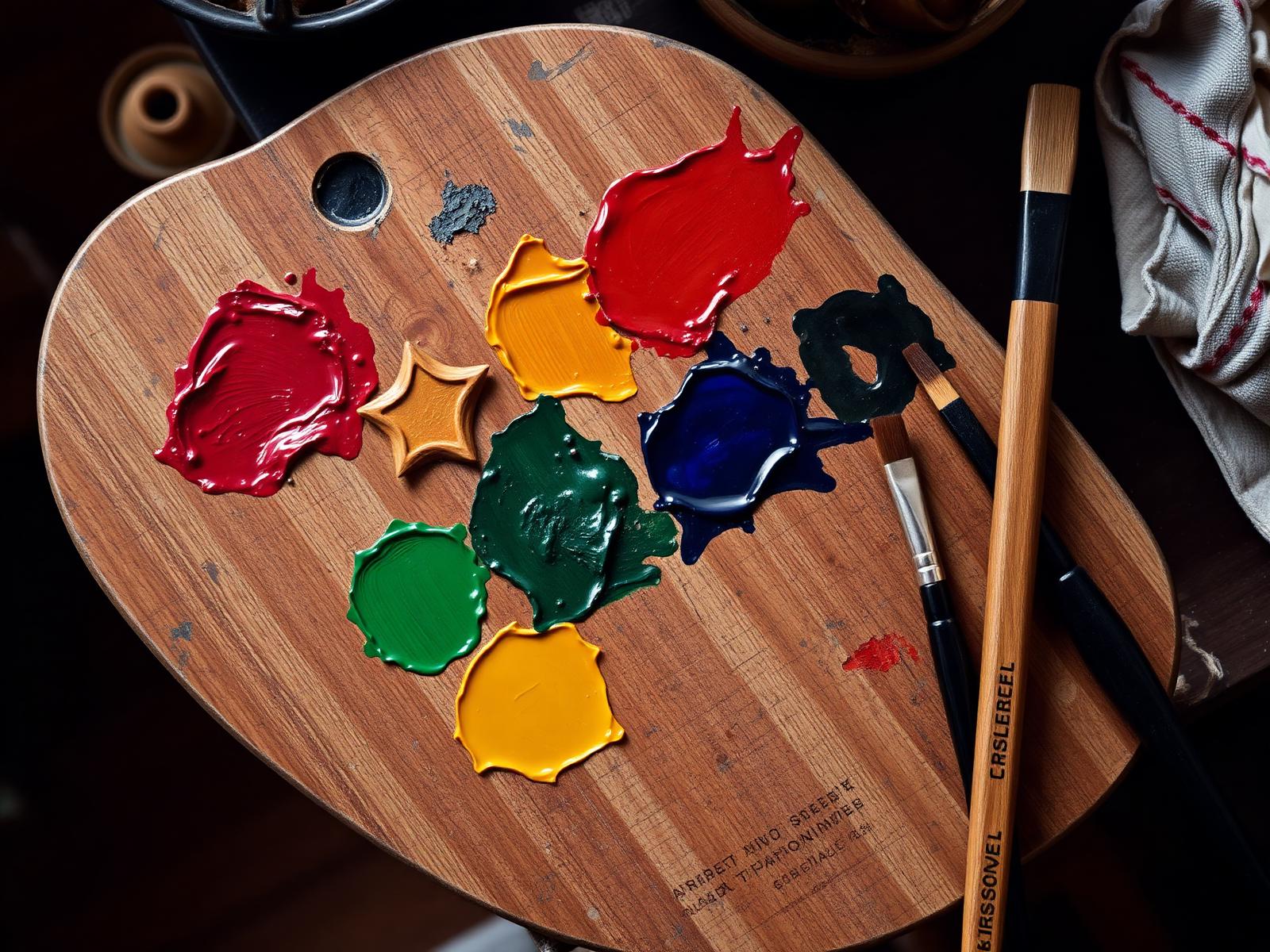
Back in the studio, a stretched linen canvas is sealed and given a warm toned ground — usually a thin wash of raw umber and a touch of yellow ochre. This is what every later layer will glow through.
03
Underpainting
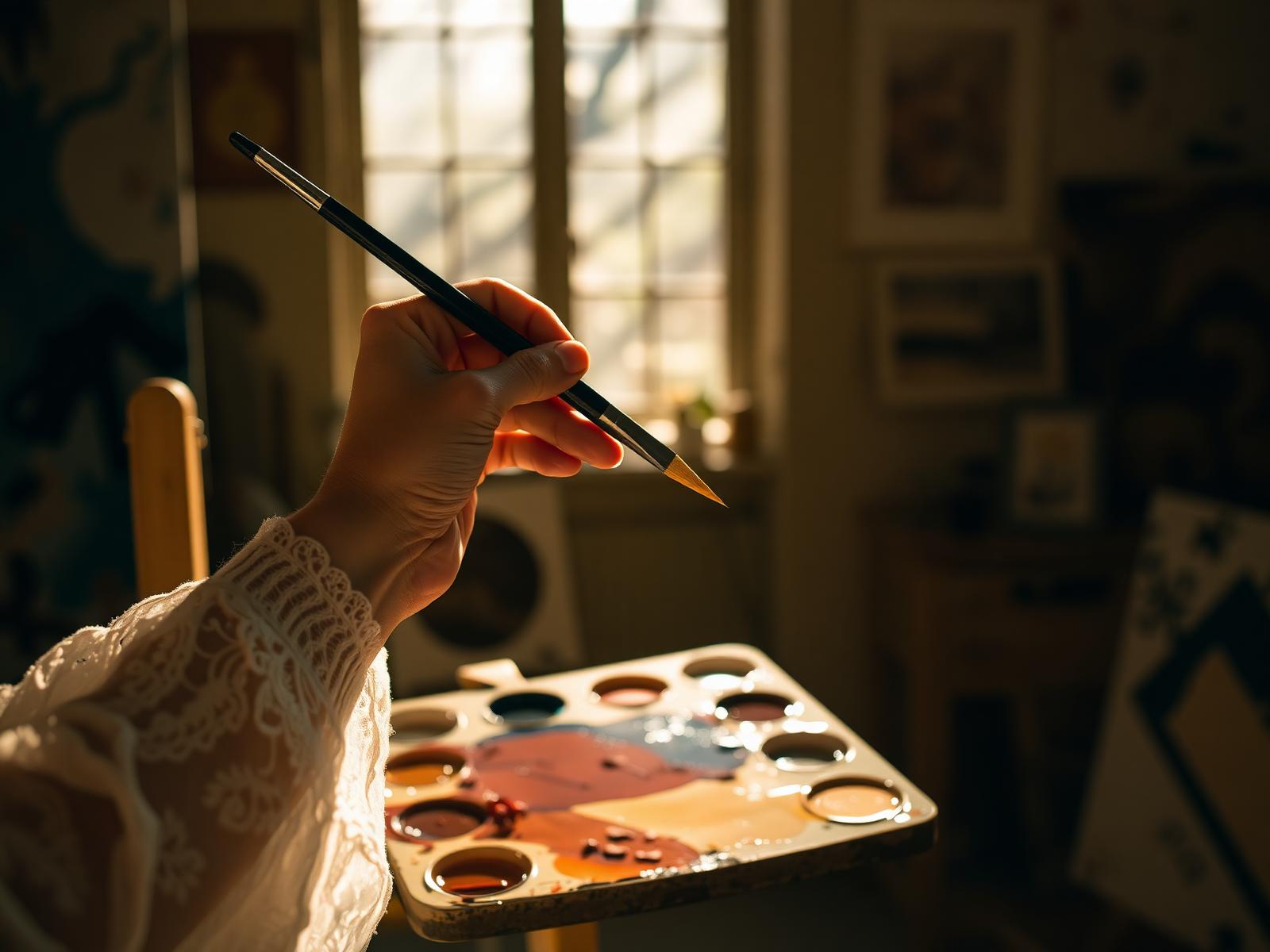
A monochrome underpainting in raw umber sets the architecture of the picture — its light, shadow, mass and movement — before any colour is invited in. This is often the longest single sitting.
04
Glazing & scumbling
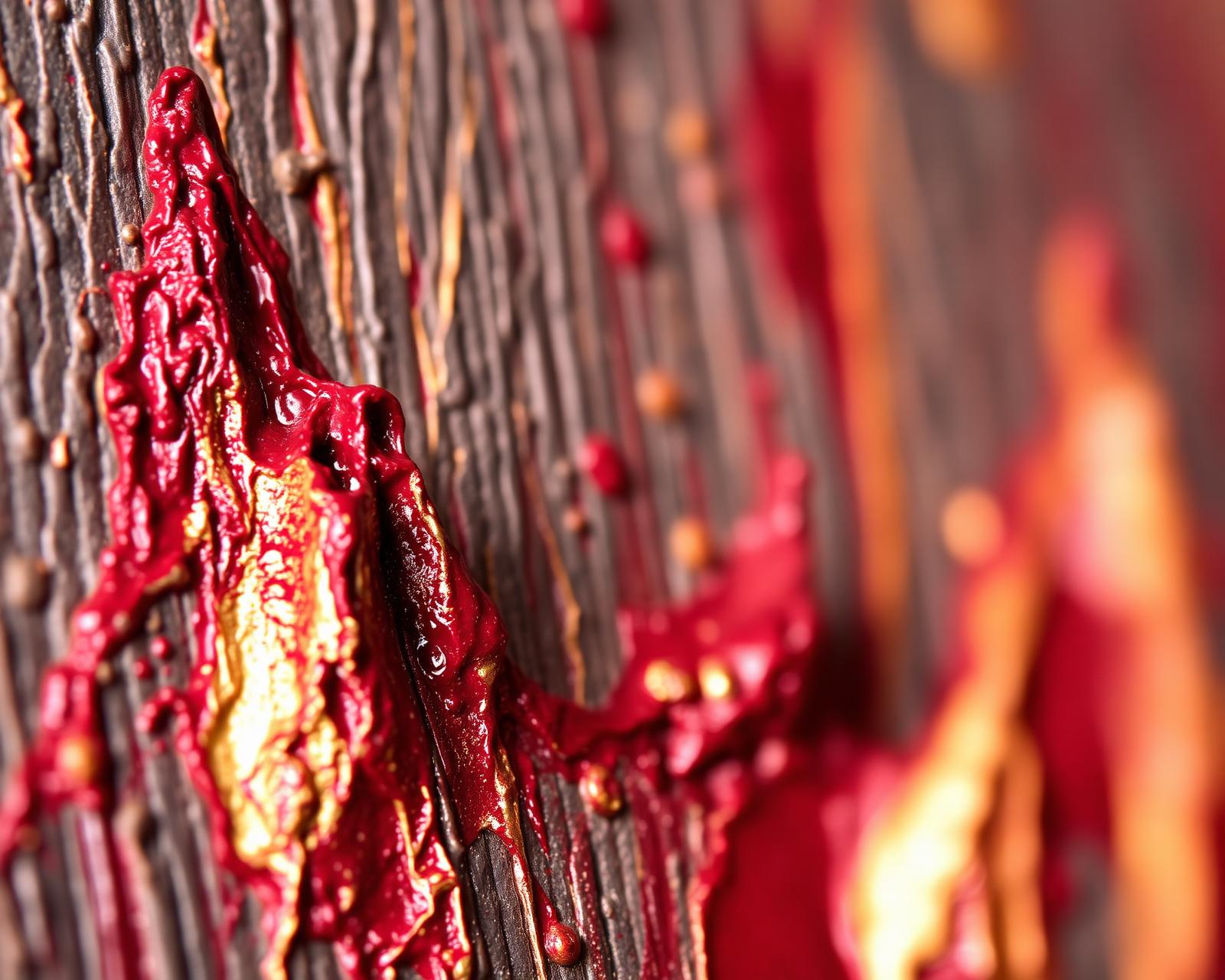
Over the following weeks, transparent glazes build depth and translucent scumbles build air. Each layer must be cured for several days before the next can go on. Patience is the medium as much as the oil is.
05
Impasto & finishing
Final passages of opaque impasto — sometimes laid with a palette knife — give the painting its breath. The work is signed only when it stops asking for more, which is rarely when I'd like it to.
06
Varnish & rest
After six months of curing, the finished painting receives a final coat of archival varnish. It is then photographed in natural light, signed on the reverse, and a certificate of authenticity is prepared.
Materials
Slow, archival, considered.
Single-pigment artist-grade oils. Hand-stretched Belgian linen, sized with rabbit-skin glue and primed with traditional lead-replacement gesso. Cured for a minimum of six months before varnishing. Built to outlive us by several generations.